Monday, March 29, 2010

March Carnival of Children's Literature

The new Carnival of Children's Literature is up on The Miss Rumphius Effect. Tricia did a great job organizing and formatting the carnival. Lots of good posts there, from book reviews to interviews to advice about reading aloud with kids.

Check out the March Carnival of Children's Literature here!


Monday, March 22, 2010

Book Review: POD

POD
by Stephen Wallenfels

At exactly 5:00am on March 14, the invasion begins. It starts with a horrible screeching noise, then black spheres descend from the sky and vaporize people and cars in the streets with beams of light. After the streets are cleared, the spheres just hang there, mysteriously. Telephones, internet, and all other electronic communications are shut down, and the streets remain a danger zone.

Sixteen-year-old Josh, trapped with his father in their house in Prosser, Washington, calls the spheres Pearls of Death, or PODs for short. Meanwhile, a twelve-year-old girl named Megs is trapped in a hotel parking garage in Los Angeles, when her mother leaves her in the car just before the invasion, promising to return in an hour.

The book alternates between Josh’s and Megs’ stories, as each deals with the aftermath of the invasion. Both are surrounded by people, and yet in some sense alone. Josh’s father obsessively organizes their limited resources, while refusing to allow Josh to talk about his mother, missing and possibly dead in the invasion. Josh can see the people in the apartment building across the street, but with no communications and the streets unsafe, they might as well be on Mars.

Megs spends her time hiding in the garage from the denizens of the hotel; her instincts warn her that she’s safer on her own. When she can, she scavenges food, water, and other resources from the other cars to survive.

POD is science fiction at its best: a gripping post-apocalyptic novel that keeps you on the edge of your seat, yet has human character and human relationships at its heart. One of the fascinating things about post-apocalyptic SF is a chance to look at what can happen to society when life becomes dangerous and resources scarce. The aliens are not the scariest thing in this book; that honor goes to the people who will do anything for food, water, or antibiotics, and the people who use the situation to their own advantage.

POD is a fairly short book, and a quick read. Once you start, you won’t want to put it down. The two stories are a little unbalanced for the first part of the book, in that Megs faces more immediate danger than Josh. Josh's story is more of a relationship story which, while compelling, is slower to develop, and at first I kept wanting to switch back to Megs’ story.

The characters are fascinating and well-developed. Josh's point of view is so well-written that even as an adult and a parent, I sided with Josh in his conflicts with his dad, and felt that his dad was being unreasonable. Megs is a likable, spunky girl who has well-developed survival skills from an unstable pre-invasion home life.

The length of this book might make you wonder if it would be appropriate for middle-grade readers. But this is definitely a YA, not middle-grade book: there are people (and animals) getting vaporized and killed and hurt in horrible ways, and dead bodies bloating after days (weeks) hanging around. Some middle-grade readers may enjoy it, but others might find it too frightening.

POD is the first book in a trilogy, and some questions are left unanswered at the end.

FTC required disclosure: Review copy provided by the publisher to enable me to write this review. The Amazon.com links above are Amazon Associate links, and I earn a very small percentage of any sales made through the links. Neither of these things influenced my review.


Saturday, March 06, 2010

New and Improved Blog

Because Blogger is discontinuing support for FTP, I had to convert my blog from an FTP hosted blog to a Blogger hosted blog. I took the opportunity while I was working on the blog to convert it to the new Blogger format, which now allows me to use Blogger widgets, and update the appearance. Because of the change from FTP to non-FTP, the blog address has changed from http://www.wandsandworlds.com/blog1 to http://blog1.wandsandworlds.com. Luckily, through the magic of Blogger's conversion tool, all the old posts will redirect to their equivalent posts on the new blog!

Wednesday, March 03, 2010

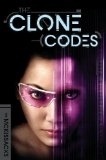
Book Review: The Clone Codes

The Clone Codes
by Patricia C. McKissack, Frederick L. McKissack, and John McKissack

I wanted to like this book. I'm always on the lookout for good young adult science fiction, and this looked perfect: a future where clones are created as servants, with safeguards and restrictions genetically built in to make them the perfect slaves. Thirteen-year-old Leanna grows up believing that clones are less than human, until her mother is arrested for being part of the radical Liberty Bell movement that is working to prove that clones are equal and should be free.

This is the kind of thing that science fiction does so well: explore sociological themes in a subtle way that can open us up to thinking about our own society in a new way. However, this book has all the subtlety of a brick wall. From the opening scene, in which Leanna is participating through school in a virtual re-enactment of an Underground Railroad escape led by Harriet Tubman, it's clear that this book is intended to teach, both about history and about the evils of slavery. This is not science fiction; it's a lesson that's not very cleverly disguised as science fiction.

It's not even very well written, which surprised me since the authors (at least, two of the three of them) have won multiple major awards. The writing style is choppy, the story and character development simplistic, and there's an awful lot of "telling" when there should be "showing." There are multiple plot inconsistencies. Minor ones, to be sure, but it was enough to annoy me. I don't understand how such acclaimed authors could have written such a book, but when I look at their bio, apparently their other books have been non-fiction. I guess that there must be a big enough difference between non-fiction writing and fiction writing -- science fiction in particular -- that skill in one area doesn't necessarily translate into skill in the other. I did wonder whether the short sentences and simplistic plot were intended to address those with reading challenges, however the press materials that Scholastic sent don't say that, and I think even kids with reading challenges will spot the too-obvious lessons in this book.

I don't normally post a review when I can't say anything good about a book. I figure that every author pours their heart and soul into a book, and no author deserves to have their work publicly trashed. If I can't find enough good to say about a book, I usually decline to review it, which I guess makes my reviews more recommendations than reviews.

However, there were a couple of things that annoyed me enough about this book to make me want to post this. The first is the apparent assumption that science fiction is easy to write, and any writer can jump on board and write science fiction. I have spent my life reading science fiction and fantasy, starting in elementary school. I took a college lit class on science fiction. I've studied YA fantasy and science fiction pretty intensely over the last several years in my roles as both blogger and publisher focusing on the genre. And I can tell you that there's nothing easy about writing science fiction. It's probably one of the hardest genres to write well. You have to have all the literary skills required to write any fiction, but in addition you have to have believable world-building and credible science. You have to develop characters that may be very different from us, such as non-human species or genetically modified clones, and yet make it possible for the human reader to understand and identify with them. If you include sociological themes, you have to do it in a subtle, thought-provoking way, and not hit the reader over the head. Books like The Clone Codes are just disrespectful to the genre.

The other thing that annoys me is that I feel that this book wouldn't have been published if the authors hadn't been award-winning, well-known authors. If this book had come in the slush pile, an editor wouldn't have gotten past the first page. With the limited number of books being published, that this one was published means that another book, maybe more well-deserving but with an unknown author, was not.

FTC required disclosure: I received a review copy of The Clone Codes from the publisher. The Amazon.com links above are Amazon Associate links, and I earn a very small percentage of any sales made through the links. Neither of these things influenced my review.


Friday, February 26, 2010

Book Review: The King Commands

The King Commands
Tales of the Borderlands Book Two
by Meg Burden

Ellin Fisher has made the Northlands her home. When she first came to the Northlands she hated the cold, bleak land, but she has come to see the beauty in it, too. And since the death of her father and the events of the previous year, King Alaric and his four brothers are the closest thing to family that she has.

But although King Alaric has repealed most of the laws restricting the Southlanders, changing the laws doesn't change the way people feel, and Ellin continues to encounter prejudice and growing unrest against the Southlanders. Then a death - and a betrayal - force her to leave her adopted home and return to the Southlands. The situation there is even worse than when she left, as the Guardians crack down even more against people with powers like Ellin's. The situation seems hopeless as Ellin, not welcome in either of the lands she loves, seeks to find a way to heal and reconcile both of them.

The King Commands is a worthy successor to Northlander, as rich and compulsively readable as the first book. It's a well-crafted, character-driven novel with a well-paced, exciting plot as well. As with Northlander, The King Commands continues to surprise the reader with unexpected plot twists, some of which I saw coming, and others I didn't. Meg Burden excels at starting with what appears to be a standard fantasy element and taking it in new directions.

Ellin is a great character; she's likeable but flawed in the way that good characters should be flawed. She sometimes makes bad decisions, and, as in the first book, one of her biggest mistakes is in not confiding in those closest to her. If she had done that, it would have avoided some of the problems (and there wouldn't have been a story). The other characters are well-developed also, including young King Alaric and his four brothers. Each of the brothers has a distinctive and thoroughly developed personality, even the twins.

There is romance in this book, although at this stage it's mostly romance of the unrequited type, with a couple of different love triangles coming into play. This is not fairy-tale romance but developed in a way that recognizes the complexity of human emotions, particularly when it comes to love.

Some of the plot elements are left unresolved for the next book, although the book is not a cliffhanger and does come to a conclusion. There are also some new and intriguing elements introduced at the end, which give hints about where book 3 is likely to go. Although, knowing Meg Burden, I'm sure there will be some surprises in store as well.

The King Commands will be published on April 12, 2010.

I received a review copy of The King Commands from the publisher. The Amazon.com links above are Amazon Associate links, and I earn a very small percentage of any sales made through the links. Neither of these things influenced my review.


Tuesday, February 16, 2010

A Wish After Midnight - new edition

Last year, I reviewed a great book called A Wish After Midnight, by Zetta Elliott, about a 15-year-old African-American girl living Brooklyn who travels back in time to Civil War era Brooklyn. At the time, Elliott had published the book independently, but it has since been picked up by the Amazon Encore program. The Amazon Encore edition is available today, with a beautiful new cover. If you haven't read this book, I highly recommend it.

Read my review of A Wish After Midnight

View the new Amazon Encore edition of A Wish After Midnight


Book Review: Bones of Faerie

Bones of Faerie
by Janni Lee Simner

The war with Faerie ended before Liza was born, but every day she lives with the consequences. As if living in a world where plants attack and kill, and crops resist being harvested, isn't reminder enough, her father never lets her forget for a minute that magic is evil and constant vigilance is required. When Liza's sister is born with clear hair, a sign of magic, her father leaves her on a hillside to die. But when Liza discovers that she also has magic, knowing that her father will kill her, she runs away before her father can find out.

Liza and Matthew, a boy from the village, find their way to another town, where they learn that not everyone lives the way they do, and that magic has the potential to help as well as harm. When Liza discovers that her mother is in danger, she and Matthew set off to find and rescue her. Along the way, they learn that the truth of the war is more complex than they were taught, and that war has consequences for both sides.

Bones of Faerie is a highly original and engrossing book. The world building is rich and creative. This very unusual post-apocalyptic world is brought to life by the beautiful writing, with just enough detail to make it vivid, but not too much detail to slow down the pace of the book. The characters are likewise well-developed and sympathetic. In a time when there's no shortage of books about Faeirie, Bones of Faerie is a real standout that should be at the top of your list.

Bones of Faeirie was a 2009 Cybils nominee.

Book borrowed from the library. The Amazon.com links above are Amazon Associate links, and I earn a very small percentage of any sales made through the links.


Thursday, February 11, 2010

Book Review: The Very Best of Fantasy & Science Fiction

The Very Best of Fantasy & Science Fiction
Sixtieth Anniversary Anthology
Edited by Gordon Van Gelder

I cut my teeth at a young age on short science fiction, reading classic SFF stories in anthologies and in my father's old magazines. So when I was offered a review copy of The Very Best of Fantasy & Science Fiction, Sixtieth Anniversary Anthology, I jumped at the opportunity.

The anthology contains over two dozen stories drawn from throughout the sixty years of the Magazine of Fantasy & Science Fiction, more commonly referred to as just F&SF. The list of writers collected in this anthology reads like a who's who of the genre, including Ray Bradbury, Theodore Sturgeon, Kurt Vonnegut, Roger Zelazny, Philip K. Dick, Harlan Ellison, James Tiptree, Jr., Damon Knight, Stephen King, Ursula K. Le Guin, Neil Gaiman, Peter S. Beagle, and many more.

Unfortunately, I found that I didn't enjoy the anthology as much as I had anticipated. I think that was more an issue of taste than anything else; certainly most of the stories were excellent stories by top-notch authors. But I found the majority of them to be a little too strange and oddly depressing for my taste. Other people who enjoy that type of story will most likely appreciate this anthology.

There were some stories in the anthology that I did enjoy. It was great to revisit old favorites such as "Flowers for Algernon," by Daniel Keyes, which I read as a child and which was probably the first story to make me cry. I was happy to rediscover "All Summer in a Day," by Ray Bradbury, which made a big impression on me as a child, and which I've remembered all this time, but couldn't remember the title or who wrote it.

There were also several new-to-me stories that I greatly enjoyed. My favorite in the anthology was probably "Solitude," by Ursula K. Le Guin, in which she does what she excels at better than any science fiction writer I know of: create a culture so different from our own as to be incomprehensible, and then make it completely understandable to the reader, in this case from the point of view of a child who grew up helping her ethnologist mother study the culture, and who comes to identify with it more than with her own. I also loved "Two Hearts," by Peter S. Beagle, in which he revisits the world of The Last Unicorn. I remember reading and loving that book many years ago, but I have to confess that I don't remember it all. Yet not remembering the book didn't diminish my enjoyment of the story. The last story in the anthology was another new favorite for me: "The Merchant and the Alchemist's Gate," by Ted Chiang, which reads like a middle-eastern folktale and is an unusual and moving look at how time-travel can affect individual lives.

Several of the stories are fairly disturbing, and at least one of them has explicit sex, so I would recommend this for mature teens and adults.

Disclaimers: I received a review copy from the publisher. The Amazon links above are Amazon Associate links, and I earn a very small percentage of any sales made through the links. Neither of these things influenced my review.


Saturday, January 30, 2010

January Carnival of Children's Lit

The January, 2010 Carnival of Children's Literature is up at Jenny's Wonderland of Books. The theme is "Winter Wonderland," but not all posts relate to the theme. It looks like an interesting bunch of posts. Personally, I think I'm going to have to check out the "Secret of the Puking Penguins" book; it sounds fascinating! Thanks to Jenny for all her hard work putting this together!

If you aren't familiar with blog carnivals, they're a monthly roundup of posts that generally rotates from blog to blog. It's a great way to see what people have been posting about recently, learn about new books, and find great new blogs to follow. Anastasia Suen has a great page with information about the Carnival of Children's Literature, including the 2010 schedule. The February Carnival will be hosted at Whispers of Dawn.


Thursday, January 14, 2010

Marian, Madame Librarian

My son is currently performing in the Children's Theatre of Annapolis production of the Meredith Wilson musical The Music Man, and Nick and I are working tech for the show. Today, we did two school shows; several schools brought students in on busses to see the show. As the curtain opened on the library scene for the song, "Marian the Librarian," it occurred to me that although the musical was written in the 1950s, and set in 1912, the set would be instantly recognizable to the kids in the audience as a library. The shelves with books, the checkout desk, the tables for reading: all these things look pretty much like a library today, with only the notable absence of computers and videos as the primary difference. (Although the sets were created by modern people, who may have brought 2009/2010 sensibility to their creation, presumably they were created with an eye towards authenticity.)

That then started me thinking, will kids 20 years from now be able to recognize it as a library as easily? What will a library look like 20 years from now? Will it even have shelves of books? (I personally think it will, although if current trends are any indication, the section of the library devoted to shelves of books may shrink).

Will it have a checkout desk? It actually may not. My library already has self-checkout, and my grocery store allows me to pick up a scanner at the entry and scan and bag my groceries as I move through the store. It's not hard to imagine that in 20 years, or even much less, libraries will have some kind of auto-checkout that will take place when you walk out the door, using RFID codes in the books and in your library card.

Will the library of the future have tables and chairs for sitting? I think it probably will. I like to think that the library of the future will still be a gathering place and a study place and a research place, and maybe even a reading place, all of which are activities that encourage the use of tables and chairs.

What about you? What do you think the library of the future will look like?